
Why Is Itadakimasu More Than Just "Let's Eat"? — The Word Before the Meal
Words & Feelings · 2026-06-08 · ~1,100 words · ~3 min read
Contents (4)
- The Word That Won't Translate
- What Itadaku Originally Meant
- Who It's Directed At — and Why That's the Interesting Part
- How to Use It
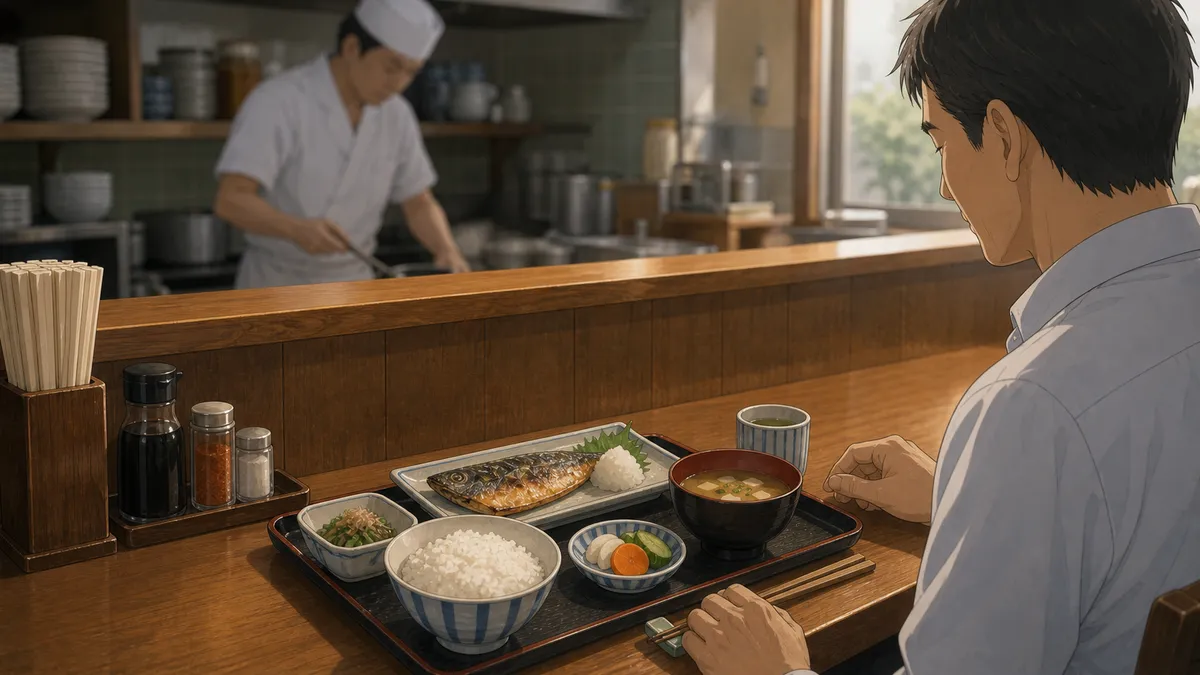
A family gathers at the table. The dishes are arranged. For a moment, everyone presses their hands together. Itadakimasu. Then they eat.
If you try to translate this into English, nothing quite fits. "Let's eat" is close in timing but misses the register. "Thank you for this meal" gets part of it, but it implies a specific person to thank. Something falls out in the translation.
The Word That Won't Translate
The reason itadakimasu resists clean translation is, I think, that it's not directed outward at a person. It's a statement of posture — the speaker declaring how they are about to receive what's in front of them.
In English, gratitude before meals is usually directed: "Lord, thank you..." or "Thank you for making dinner." Itadakimasu is more like: "I receive this with reverence" — the orientation is inward, about the speaker's relationship to the food, not about thanking a specific entity.
What Itadaku Originally Meant
The verb itadaku (頂く) traces back to a specific physical gesture: placing something above one's head as an act of humble receipt. The kanji character itself (頂) means "mountaintop" — the highest point. When someone of high status or sacred significance offered something to a person of lower standing, that person would receive it by raising it to their forehead, above their head.
According to Tofugu's detailed etymology and Wikipedia's entry on Itadakimasu, the word entered mealtime use as an expression of receiving food with this same quality of reverence — acknowledging that what you're receiving is something to be held high, not taken for granted.
The specific custom of saying itadakimasu before meals in its current widespread form developed during the Showa period, partly through the influence of the Jodo Shinshu sect of Buddhism, according to CoCoRo. It is older than the mid-20th century in root, but the present universality is relatively recent.
Who It's Directed At — and Why That's the Interesting Part
When Japanese people say itadakimasu, who are they thanking?
The honest answer is: there isn't one. Multiple readings coexist:
- The life of the ingredient (the animal or plant that died to become food)
- The farmers who grew it
- The person who prepared it
- A divine presence
- The food itself
None of these is "the" correct reading. The word seems to function as a gesture of gratitude aimed at the whole situation of the meal — the fact that food exists, that it was made, that it's here.
In this sense, itadakimasu resembles sumimasen — another Japanese word that covers multiple registers (apology, thanks, excuse me) without collapsing them into one. Both words are precise about the speaker's attitude while remaining deliberately open about who or what receives that attitude.
How to Use It
The basics: press your hands together lightly (or just say the word — some people skip the hand gesture in casual settings), say itadakimasu before eating. At the end of a meal, gochisousama (deshita) closes the frame: "it was a feast" — gratitude for what was eaten. Where itadakimasu opens a meal, gochisousama closes it.
Neither word requires deep reflection in the moment. Most Japanese people say itadakimasu automatically, the way an English speaker says "cheers" when raising a glass. The meaning, if it's present at all, runs below the surface of the habit.
But there's something in the gap between the automatic use and the word's original meaning — "I raise this above my head" — that seems worth knowing, even if it doesn't change how you use the word.
Sources & References
- Tofugu, "What Does Itadakimasu Mean?" — etymology and usage
- Wikipedia, "Itadakimasu" — history, Jodo Shinshu association, kanji origin
- CoCoRo, "Itadakimasu & Gochisousama: Meaning and History" — historical popularization
The Japanese Mind: Understanding Contemporary Japanese Culture
Chapters on aimai (ambiguity), amae, giri, wa and more — the values beneath the gestures and words. For readers who want to go deeper into the 'why.'
A Geek in Japan (Revised & Expanded)
A wide-angle introduction to the 'why' of Japanese culture — manga, anime, Zen, the tea ceremony and more. A natural companion to the topics Naze explores.
Share this article
Read Next
- Words & FeelingsPILLARWhy Is Silence Not Awkward in Japan? — The Concept of MaIn many cultures, silence in conversation signals something's wrong. In Japan, silence can mean the …
- Words & FeelingsWhy Are Japanese Shops So Loud If Japan Is 'Quiet'?Japanese trains are near-silent; shops hit you with a full 'Irasshaimase!' the moment you enter. One…
- Words & FeelingsWhy Do Japanese People Find It Hard to Say No?Japan's indirect 'no' — chotto, muzukashii, 'I'll think about it' — isn't evasion. It's a system for…
- Words & FeelingsWhy Does 'Daijoubu' Mean Both Yes and No in Japanese?'Daijoubu desu' works as a polite refusal one moment and a reassurance the next — same word, opposit…
- Words & FeelingsWhy Does "Mottainai" Mean More Than Just "Wasteful"?"Mottainai" translates as wasteful, but the word carries something English lacks — the grief of disc…
Related Articles
Articles in the same category: