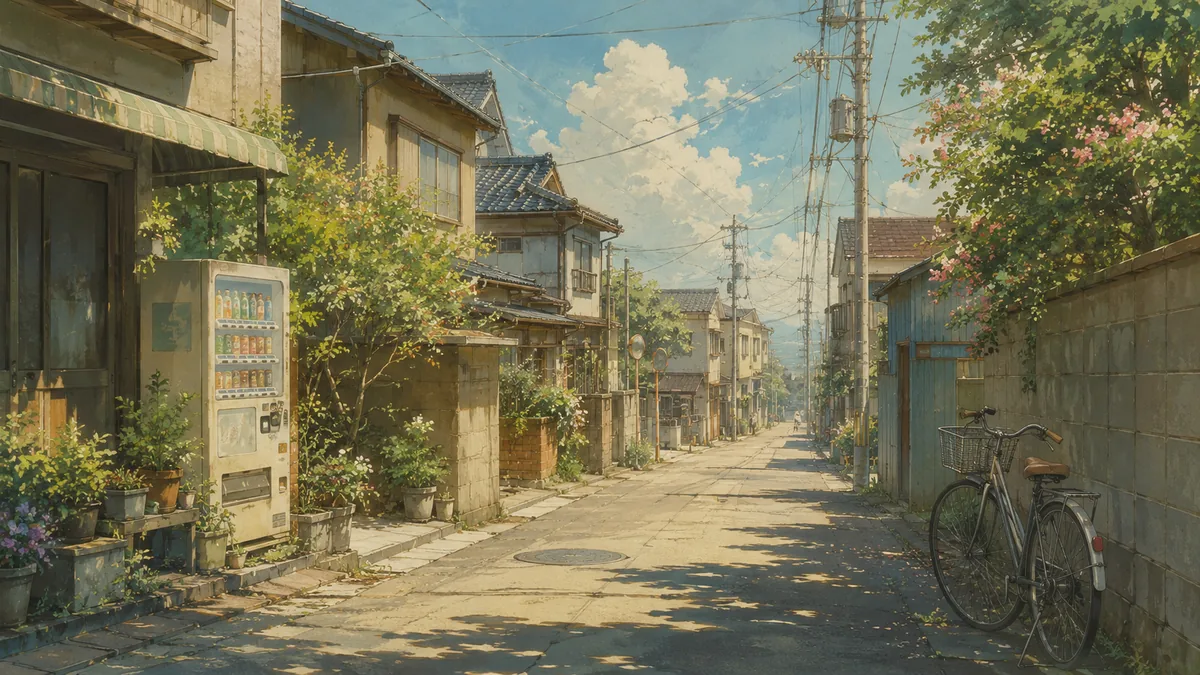
Why Does Japan Have So Many Seasonal Limited-Edition Products?
Everyday Japan · 2026-06-08 · ~1,200 words · ~4 min read
Contents (5)
- The Shelves Change in 72 Hours
- Shun — The Cultural Foundation
- The Machinery of "Now or Never"
- What the Beauty of Transience Costs
- Where to Feel It
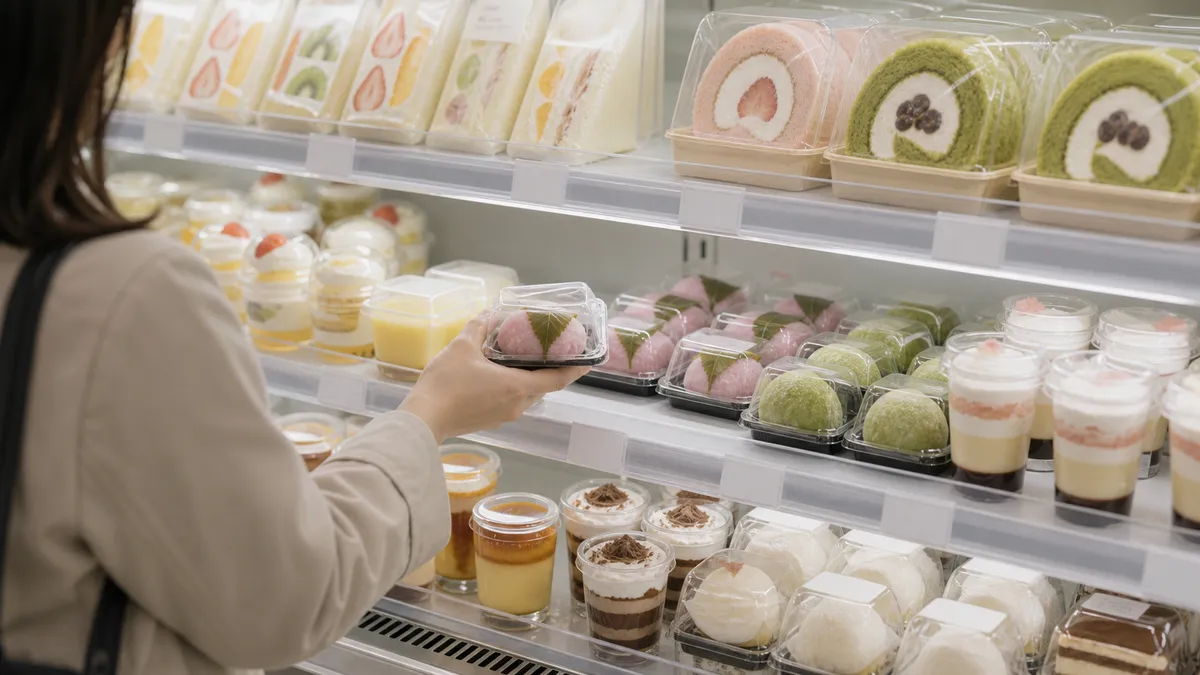
It is the first week of March. The convenience store nearest to Shinjuku Station has, in the span of seventy-two hours, replaced its entire confectionery section. Gone are the winter chocolates and hot milk tea packs. In their place: sakura-flavoured everything. Pink packaging. Cherry blossom motifs on crisps, on mochi, on canned coffee, on face wash.
By late April, it will be gone. You will not be able to buy sakura-flavour canned coffee in July. The season will have ended, and so will the product.
The Shelves Change in 72 Hours
For anyone who has lived in Japan for a year, the product calendar is as reliable as the actual one. Spring: sakura and strawberry. Summer: watermelon, salt-lemon, chilled desserts in bright packaging. Autumn: chestnut (kuri), sweet potato (imo), the brief and fervent matcha-and-hojicha window. Winter: strawberry parfaits and hot chocolate variants that disappear in February.
Convenience stores are the most visible stage. But the pattern runs through department store basement food halls, vending machines, fast food chains, and supermarket deli counters. National Geographic has noted that one of the distinctive pleasures of Japanese konbini is its genuine seasonal variation — not just a marketing gimmick, but a reflection of how Japanese food culture has historically organized itself around what is freshest right now.
Shun — The Cultural Foundation
The concept of shun (旬) — the peak season for each ingredient — has deep roots in Japanese food culture. Eating strawberries in March, when domestic production peaks, isn't just a preference; it has been understood, in traditional Japanese cooking, as the correct way to eat strawberries. Eating them out of season was considered to miss the point.
The seasonal product cycle is, in part, a mass-market expression of that idea.
Shun created the appetite; retail found a way to satisfy it at scale. That's the most honest summary I can offer.
The Machinery of "Now or Never"
Here's how I see it — and I want to be clear that the commercial and cultural threads are genuinely hard to separate here.
There is something in Japan's seasonal limited-edition cycle that resonates with a broader aesthetic around transience — the sense that things are more worth attending to when they are temporary. The same instinct that pulls crowds to cherry blossom viewings (hanami) during the two or three weeks of peak bloom may, in some diffuse way, inform the response to sakura-flavoured coffee available for six weeks only.
Whether the people buying sakura-flavour anything in March are thinking about mono no aware — the Japanese concept of the bittersweet beauty of impermanence — I very much doubt. Most are buying it because it's there, it looks appealing, and it won't be there next month.
Speaking for myself, I think Japanese people are almost abnormally weak to the words "limited," "only now," "only N left." I'm no exception. "If I don't buy it now, I might never get it again"; "I don't want to regret it later" — that feeling slips right past the question of whether I actually need the thing. Beyond anything as lofty as an aesthetic of savoring the season, I suspect it's this plainer, more urgent don't-want-to-miss-it that does the most work in front of those shelves.
But the commercial structure wouldn't work if the cultural scaffold wasn't in place. Seasonal scarcity in retail isn't unique to Japan, but the granularity of the Japanese seasonal product cycle — the number of categories affected, the speed of turnover, the precision with which the retail environment tracks the season — is notable.
What the Beauty of Transience Costs
The seasonal limited-edition cycle has real costs that its charm can obscure.
Japan's food waste was estimated at approximately 4.72 million tonnes in FY2022, according to the Ministry of Agriculture, Forestry and Fisheries and the Ministry of the Environment. The rapid production-clearance-disposal cycle for seasonal products is part of this system, even if not separately quantified.
There's also the experience of visitors who arrive just after a season has ended — all the autumn chestnut products are gone, the winter strawberries haven't started yet, and what remains is the generic year-round selection. The seasonal charm is, by design, available only at the right moment.
Where to Feel It
- To experience it: visit a 7-Eleven or Lawson at any seasonal turning point — late February to early March (pre-sakura), late August to early September (the autumn shift), or the week after Christmas (when strawberry products surge). The change is visible within days.
- In manga: Yotsuba&! (Kiyohiko Azuma) traces a young child's discovery of each new season through its flavours, festivals, and foods — a useful guide to how seasons are lived rather than just observed in Japan.
- To taste it: services like Bokksu curate seasonal Japanese snacks for overseas delivery — a way to experience the cycle without being in Japan during a specific window.
Sources & References
- National Geographic, "Japan's konbini culture" — seasonal variation assessment
- Ministry of Agriculture, Forestry and Fisheries / Ministry of the Environment (Japan): FY2022 food waste estimate 4.72 million tonnes (joint official statistics) — MAFF press release / MOE press release
- Visitinsidejapan, "Exclusive and Limited Edition Products" / Bokksu, "Deep Dive into Japanese Convenience Stores" — seasonal product cycle overview
A Geek in Japan (Revised & Expanded)
A wide-angle introduction to the 'why' of Japanese culture — manga, anime, Zen, the tea ceremony and more. A natural companion to the topics Naze explores.
The Japanese Mind: Understanding Contemporary Japanese Culture
Chapters on aimai (ambiguity), amae, giri, wa and more — the values beneath the gestures and words. For readers who want to go deeper into the 'why.'
Share this article
Read Next
- Everyday JapanWhy Are Japanese Train Bento (Ekiben) So Special?Ekiben turn the train journey into a curated regional food tour. Here's the quiet logic behind Japan…
- Everyday JapanWhy Are There So Many Signs and Notices in Japan?Japan's streets and stations are layered with notices. Here's what the density reveals about preempt…
- Everyday JapanWhy Do Japanese People Care So Much About Seken?Seken — Japan's unnamed collective gaze — shapes everything from garbage etiquette to career choices…
- Everyday JapanWhy Do Japanese Households Still Keep a Handwritten Kakeibo? — The 1904 Method Behind the NotebookKakeibo — Japan's household account book — traces back to 1904, when journalist Hani Motoko proposed…
- Everyday JapanWhy Are Japanese 100-Yen Shops So Surprisingly Good? — The Daiso Model ExplainedJapan's 100-yen shops aren't just cheap stores — they run a specific model built on massive order vo…
Related Articles
Articles in the same category: