Why Do Japanese People Watch Until You're Out of Sight? — The Farewell That Doesn't End
Gestures & Manners · 2026-06-08 · ~1,400 words · ~5 min read
Contents (5)
- Until the Corner
- The Farewell That Doesn't End at Goodbye
- Nagori — The Word That Names This Feeling
- Ichigo Ichie: The Meeting You Only Get Once
- When the Form Outlasts the Warmth
You've just said goodbye to a Japanese colleague at the station. You wave, turn, head toward the ticket gates. You look back once — they're still there, watching. You go through the gate. You glance back again from the other side. Still there.
They wait until you disappear before they leave.
Until the Corner
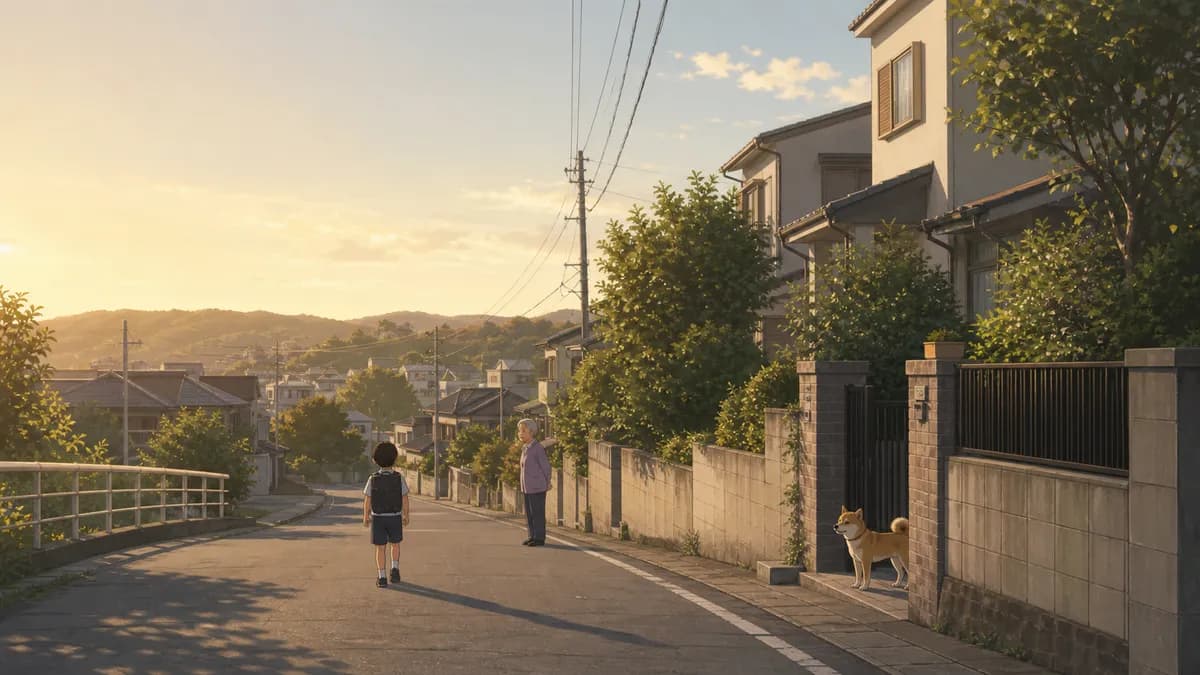
Staff at a traditional inn stand at the entrance until the guest's taxi rounds the corner and is out of sight. A junior employee bows to a closed elevator door — the senior who left is long gone, but the bow continues until the sound of the elevator fades. People stand on a train platform waving until the train has gone out of sight.
The person being seen off has not yet "fully left" until they are no longer visible.
The Farewell That Doesn't End at Goodbye
Here's how I read this — though I want to be honest that it's an interpretation.
In many cultures, a goodbye completes itself at the moment of mutual acknowledgment: eye contact, a handshake or wave, and then both people turn and walk away. The separation happens in that exchange. After that, it's done.
In Japan, the farewell seems to remain open until the departing person has disappeared. Walking away first — especially in formal or hierarchical goodbyes — can feel like a withdrawal of presence before the moment has fully closed.
One way to think about it: the person staying behind is maintaining a small responsibility — to be visible in case the departing person turns back. The goodbye is held open a little longer, in case it's needed.
Whether this is what's actually happening in anyone's mind, I can't say. Many people perform this gesture without thinking about it. It has become a physical reflex — a way of respecting the texture of leave-taking.
Nagori — The Word That Names This Feeling
Japanese has a word for this: nagori (名残) — the bittersweet feeling at the moment of parting, the sense of something still lingering as you leave. Nagori-oshii means "reluctant to part" — the feeling that you haven't quite said goodbye enough, even as the goodbye is technically complete.
The gesture of watching until someone disappears may be one physical expression of this — a refusal to close the moment too quickly, to end the connection before the other person is truly gone.
This is a reading, not a documented explanation. But the word nagori does suggest that the Japanese language has attended carefully to the emotional texture of farewells in a way that has shaped the physical customs around them.
For my part, I feel this send-off holds two things at once: the sense of ichigo ichie — that this meeting may be the only one you'll ever have — and gratitude for the trouble the other person took to come at all. This might be the last time I see them; they went out of their way to be here. So you want to keep your head bowed toward their retreating back just a little longer. In shops, too — a boutique, say — the staff will often walk you to the exit and keep bowing for a while even after you've left. That, I suspect, comes from the same feeling.
And I'll admit something else: for me, this isn't a habit that settled in unnoticed. I do it on purpose. I decide to watch until they're out of sight. Because if this really were the last time, anything less than the fullest courtesy I could manage is something I'd regret. The length of a send-off, I think, isn't a measure of time. It's the shape of a resolve.
Ichigo Ichie: The Meeting You Only Get Once
This might be the last time. That small voice in the chest of the person seeing someone off has, I think, long had a name in this country.
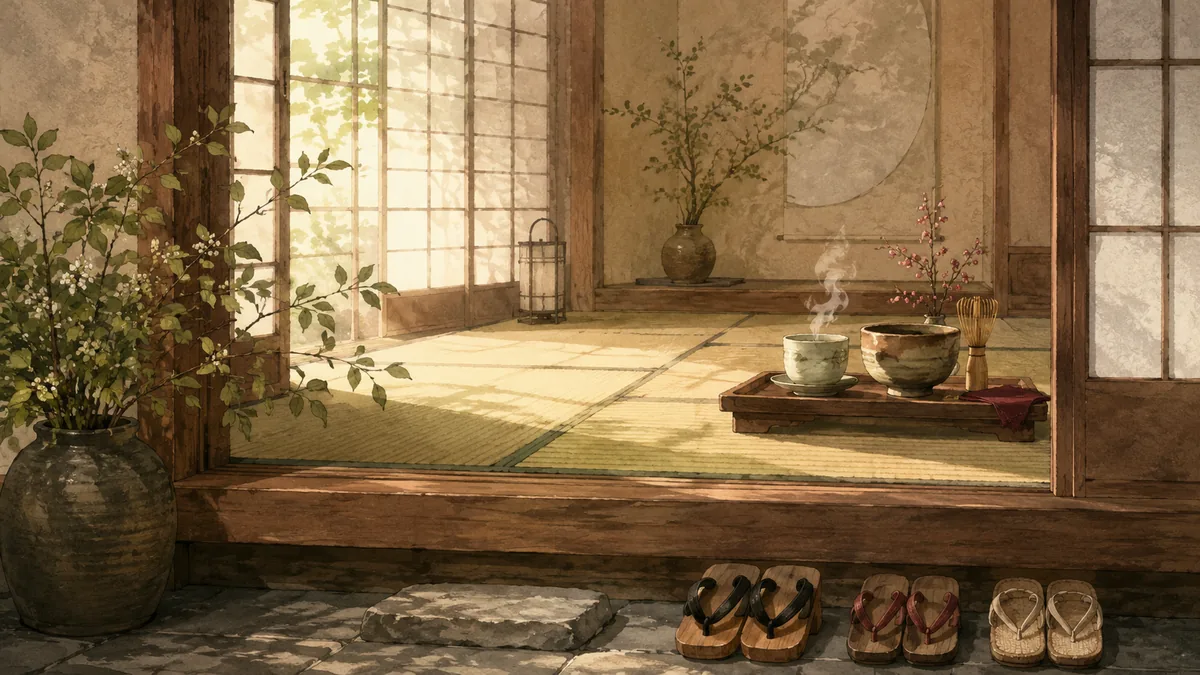
Japanese has a phrase — ichigo ichie (一期一会). It's said to come from the tea ceremony: meet each gathering as though it were once in a lifetime. The same faces, the same season, the same warmth of the water will never line up in quite this way again. So you give that single occasion your full courtesy.
The length of a send-off seems tied to that premise. There is, in truth, no guarantee that you'll meet this person again in exactly this form. It's because we believe there will be a next time that we can turn away so easily. And the moment you let yourself think there might not be, turning your back suddenly feels like a loss. There's no way to prove any of this. Still, watching a retreating figure until it disappears may be the body knowing, before the mind does, that some meetings don't come twice. Regret is the one thing that always arrives after the send-off is over. So the courtesy has to be paid while the back is still in view.
When the Form Outlasts the Warmth
Not all send-offs carry genuine feeling. The bowing to a closed elevator is also one of the more frequently cited examples of form persisting after meaning has drained out — a gesture maintained as a performance of propriety rather than an expression of actual reluctance to part.
This tension appears in Japanese culture's send-off customs the same way it appears in omotenashi hospitality: warmth and obligation can live inside the same gesture. Both can be real at the same time.
Visitors often find the watch-until-disappear send-off touching — a reminder that they were seen, that someone stood in the cold a little longer because of them. Others find it faintly uncomfortable, as if they're being followed by someone's attention after they'd already mentally moved on.
Both reactions are honest. The gesture carries both possibilities.
Sources & References
- Nagori (名残): standard Japanese dictionary definition; observation-based reading
- No quantitative research on this specific practice was found; this piece is based on observation and cultural reading
The Japanese Mind: Understanding Contemporary Japanese Culture
Chapters on aimai (ambiguity), amae, giri, wa and more — the values beneath the gestures and words. For readers who want to go deeper into the 'why.'
A Geek in Japan (Revised & Expanded)
A wide-angle introduction to the 'why' of Japanese culture — manga, anime, Zen, the tea ceremony and more. A natural companion to the topics Naze explores.
Share this article
Read Next
- Gestures & MannersPILLARWhat Is Omotenashi — And Why Does Japanese Hospitality Feel Different?Omotenashi is Japanese hospitality that anticipates what you need before you think to ask — and make…
- Gestures & MannersWhy Don't Japanese People Linger After Eating?Japanese diners tend to leave fairly soon after finishing, especially when it's busy. Here's the qui…
- Gestures & MannersWhy Do Japanese Restaurants Give Free Water and Oshibori?Sit down at almost any Japanese restaurant and cold water, tea, and an oshibori appear before you've…
- Gestures & MannersWhy Does Japan's School Year Start in April?Japan's school year opens in April because its fiscal year does — a calendar fixed in the Meiji era,…
- Gestures & MannersWhy Do Japanese Train Workers Point and Call? — The Science Behind Shisa KankoStation workers who point firmly at signals and call out their status aren't performing a ritual — t…
Related Articles
Articles in the same category: