Why Is Tokyo So Safe? How the World's Biggest City Stays Calm at Night
Everyday Japan · 2026-06-20 · ~1,550 words · ~6 min read
Contents (6)
- A Megacity That Doesn't Feel Like One at Night
- What Tokyo Has on Every Corner
- The Last-Train Choreography
- Here's How I See It — One Reading Only
- Not Everyone, and the Shadow on the Map
- Where to Feel This Most Clearly
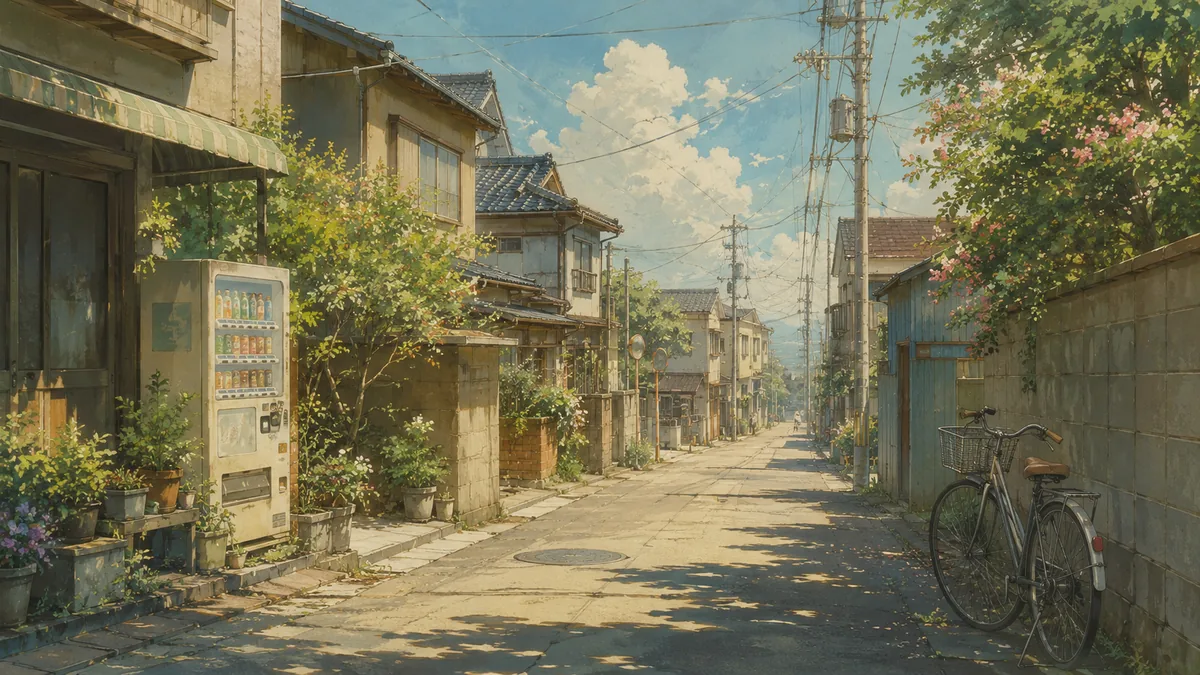
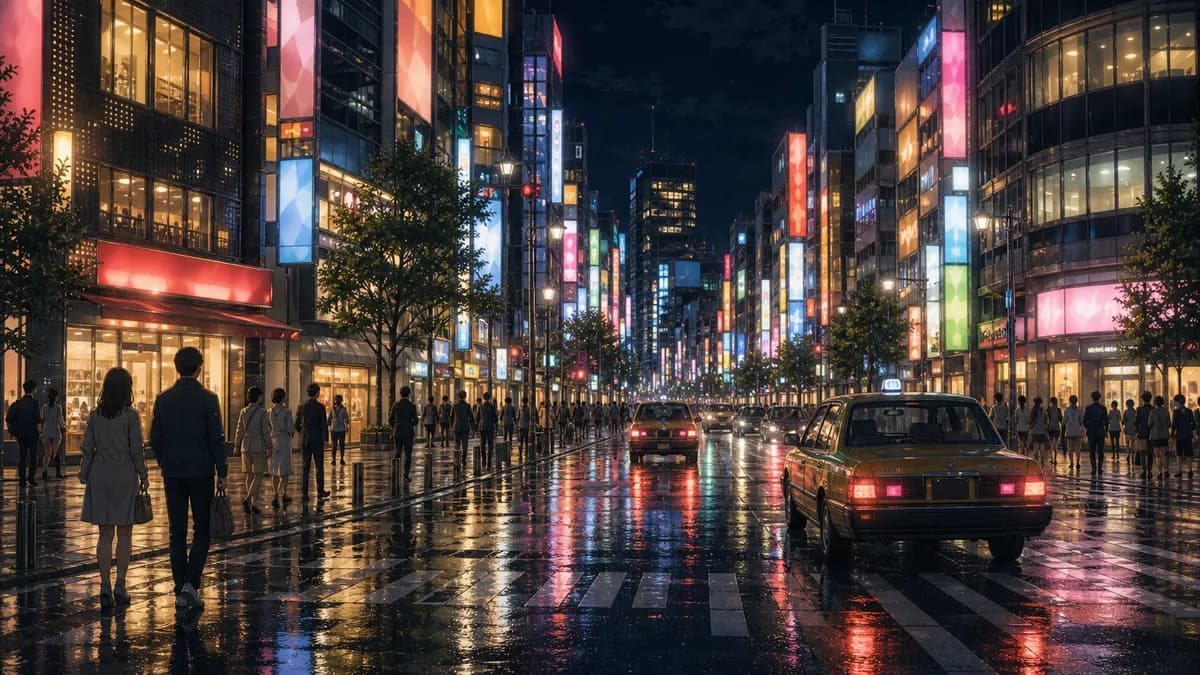
It's past midnight in Shinjuku — one of the busiest transit hubs on the planet — and a woman is walking to her train alone, scrolling her phone, shoulders relaxed. A few streets over, in a quiet residential block, the only sound is the hum of a vending machine and the glow of a convenience store at the corner.
A city of roughly fourteen million people, the heart of an urban region whose population is often put at approaching 40 million, depending on the definition used, and somehow the late-night street doesn't carry the tension you'd brace for in most cities that size. That gap — between Tokyo's scale and how it feels — is what first-time visitors notice fastest.
So why is Tokyo so safe? Not perfectly safe — we'll get to the shadow — but safe in that specific, everyday, walk-home-at-2am way.
A Megacity That Doesn't Feel Like One at Night
I've written before about why Japan as a whole feels safe, and a lot of that applies here. But Tokyo is worth its own look, because the usual intuition — big city, more danger — quietly fails, and it's interesting to ask why.
Here's the most direct, observable answer: Tokyo's safety isn't mainly about having fewer dangerous people in a city this size. It's that the city is built — physically and socially — so that very little happens unobserved.
That's the spine of it. Everything below is texture around that one line.
Density usually works against safety. In Tokyo, a lot of the time, it works for it. Streets are narrow and closely built, overlooked by windows and balconies on both sides. Shops, homes, and tiny restaurants sit stacked together, so there are eyes at street level for most hours. Even at 1am, somewhere on the block is lit and occupied. The city rarely empties out into the kind of long, dark, unwatched stretch where trouble likes to happen.
What Tokyo Has on Every Corner
A few concrete things stand out once you start looking — and they're more visible in Tokyo than almost anywhere:
Koban, everywhere. The koban — the neighborhood police box — is the unit of Tokyo policing you actually see. The Tokyo Metropolitan Police Department operates hundreds of them across the wards, often right at a station exit or a major crossing. Officers do foot and bicycle patrols of their assigned patch, give directions, and are a known, fixed point in the neighborhood. In a city this big, the effect is that a uniformed, locally-rooted presence is rarely more than a few minutes' walk away.
Konbini light. Tokyo is saturated with 24-hour convenience stores. Their function in the safety picture isn't crime-fighting — it's the lit, staffed, ordinary room you can step into at any hour. On a late walk home, that recurring rectangle of light changes how a street feels at a gut level. Nothing about it shows up in a crime statistic, and yet ask people what makes them feel safe walking at night, and the konbini comes up again and again.
Movement without chaos. Tokyo moves staggering numbers of people, and it does it in an orderly way — queues on the platform, trains running on time, crowds that flow rather than shove. Orderly crowds are, in practice, safer crowds: less friction, fewer flashpoints, more bystanders paying quiet attention.
None of this is unique to Tokyo in the sense that no other city values policing or light. But the density of all of it at once — koban, konbini, overlooked streets, orderly transit — is unusually high.
The Last-Train Choreography
If you want the texture of Tokyo safety, watch a weeknight last train.
The cars fill with tired commuters, some of them drunk after after-work drinks. And mostly, nothing happens. Intoxicated passengers are managed — by station staff, by the unspoken etiquette of the car, sometimes just by being left to sleep it off — without confrontation or drama. People doze on the train with bags loose on their laps, trusting that they'll wake up with everything still there. That trust is mostly, though not always, rewarded.
It's a practiced, quiet system operating under enormous load. And it tells you something: Tokyo's safety isn't fragile calm waiting to break. It's a routine the city performs millions of times a day.
Here's How I See It — One Reading Only
I won't call this "the essence of Tokyo," or of Japan. I don't think that phrase explains anything.
What I'd offer instead is this: Tokyo is one of the most densely packed places humans have ever built, and it has spent the postwar decades building the social and physical machinery to make that density livable — and watched. The eyes on the street aren't mainly about fear or control, though they can shade into that. They look more like a response to simple arithmetic: pack this many lives this close, and systems emerge so that everyone's behavior is, gently, everyone's business.
Perhaps. That's one way to frame it. Others point to low gun availability, to specific policing structures, to a culture of not causing trouble for others. They're probably all partly true at once, tangled in ways that resist a clean ranking.
What I can say is that the observable facts — the koban at the station mouth, the konbini light, the woman walking calmly through Shinjuku at midnight — add up to something real and consistent. What exactly it is is harder to pin down than the experience of it.
Not Everyone, and the Shadow on the Map
Of course, not everyone experiences Tokyo as safe — and this is not a footnote.
Sexual harassment and assault are significantly underreported in Japan, and Tokyo's crowded trains are a specific site of it. Groping (chikan) is a recognized, persistent problem; women-only carriages were introduced on many lines precisely because of it. The low official numbers partly reflect high barriers to reporting — in the wrong direction. If you're planning to travel here, the practical side of this is covered honestly in Is Japan Safe for Solo Female Travelers?.
There's also the nightlife shadow. Districts like Kabukicho aren't war zones, but they are places where nightlife-related scams, aggressive touts, and drink-spiking reports are more concentrated than in ordinary residential areas. "Safe" here means a low risk of random violence — not that nothing can go wrong.
And honestly, it isn't uniform even within Tokyo. Step into a corner like Kabukicho late at night and — though there's more than enough light — the air is unmistakably different from the calm of a residential block a few streets away. Something I can't quite name puts a prickle at the back of the neck. And — this isn't a claim backed by numbers, just a personal sense — there are moments lately when the safety I'd taken for granted feels a little less guaranteed than it used to. If safety is held up by design, then it can run thinner in some places, and it can waver if it's left untended. That's part of the honest picture too.
If I'm being fully honest, I also sometimes feel that the quiet manners and small considerations that held this sense of safety up are, in places, beginning to loosen — and that makes me a little sad. This isn't about pinning it on anyone in particular. It's more that things handed down as if they were automatic may, without anyone tending them on purpose, quietly thin out before we notice.
And the reputation itself can be a trap. "This is Tokyo, that doesn't happen here" is a sentence that has silenced real victims. Safety infrastructure and safety mythology are different things. One helps people; the other can stop them from asking for help. The calm midnight street and the underreported harm are both true, and both have to be said in the same breath.
Where to Feel This Most Clearly
If you want to understand Tokyo's safety concretely rather than as a slogan:
Step into a koban at a major station and ask for directions. It's a listed part of their job. Notice the neighborhood map on the wall, the logbook, the sense of a fixed local node in a vast city.
Ride a last train on a weeknight and just watch the choreography — how a packed, tired, slightly drunk car polices itself almost without words.
Walk a residential backstreet at night, away from the neon, and notice how often a konbini's light or a lit window reaches you. The city is watching, in the gentlest possible way.
This piece is the first in a closer look at how individual Japanese cities hold their calm; Osaka and Kyoto have their own different answers, and I'd rather explore them one at a time than flatten them into "Japan is safe."
So here's the question I'll leave you with: in your own city, is safety something you feel in the design of the street at midnight — the light, the eyes, the routine — or somewhere else entirely?
Sources & References
- Tokyo Metropolitan Police Department (警視庁) — Koban and policing
- Tokyo Metropolitan Police Department — Lost Property Annual Report
- Cabinet Office, Government of Japan — Survey on Violence Between Men and Women (男女間における暴力に関する調査)
- Institute for Economics & Peace — Global Peace Index
A Geek in Japan (Revised & Expanded)
A wide-angle introduction to the 'why' of Japanese culture — manga, anime, Zen, the tea ceremony and more. A natural companion to the topics Naze explores.
The Japanese Mind: Understanding Contemporary Japanese Culture
Chapters on aimai (ambiguity), amae, giri, wa and more — the values beneath the gestures and words. For readers who want to go deeper into the 'why.'
Share this article
Read Next
- Everyday JapanHUBIs Japan Safe for Solo Female Travelers? An Honest LookMany solo female travelers report feeling remarkably safe in Japan — and the country's crime rates b…
- Everyday JapanIs Japan Safe for Families Traveling With Kids?Japan's streets are calm enough that six-year-olds commute alone, but safe and easy aren't the same …
- Everyday JapanIs Japan Safe to Travel To? An Honest Look for First-Time VisitorsJapan's safety reputation is largely deserved — returned wallets, quiet midnight trains, orderly cro…
- Everyday JapanWhy Are Japanese Train Bento (Ekiben) So Special?Ekiben turn the train journey into a curated regional food tour. Here's the quiet logic behind Japan…
- Everyday JapanWhy Are There So Many Signs and Notices in Japan?Japan's streets and stations are layered with notices. Here's what the density reveals about preempt…
Related Articles
Articles in the same category:
- Why Do Japanese People Wear Masks So Often? — Courtesy, Habit, and the Quiet Shield
- Why Does the Japanese Convenience Store Checkout Ask So Many Questions?
- Why Does Lost Property Get Returned in Japan? — The System Behind the Stories
- Why Is There No Tipping in Japan? — The Logic Behind the No-Tip Rule