Why Is There No Tipping in Japan? — The Logic Behind the No-Tip Rule
Everyday Japan · 2026-06-03 · ~1,200 words · ~5 min read
Contents (7)
- Service Is Already Included
- What Service Actually Looks Like
- The Wage Structure Behind It
- A Word on Omotenashi
- The Shadow Side
- Where to Notice It
- The Question It Leaves
You've just finished a bowl of ramen. The broth was perfect, the server refilled your water without being asked, and bowed you out the door as though the restaurant had been waiting specifically for you. You reach for a few extra coins to leave on the table — and the server, gently but unmistakably, pushes them back.
Not rudely. Just clearly.
If you've spent any time in Japan, or watched enough slice-of-life anime, you've probably seen this moment or something like it. And if you're from a country where tipping is the norm, it can feel genuinely disorienting. Was I doing something wrong?
Service Is Already Included
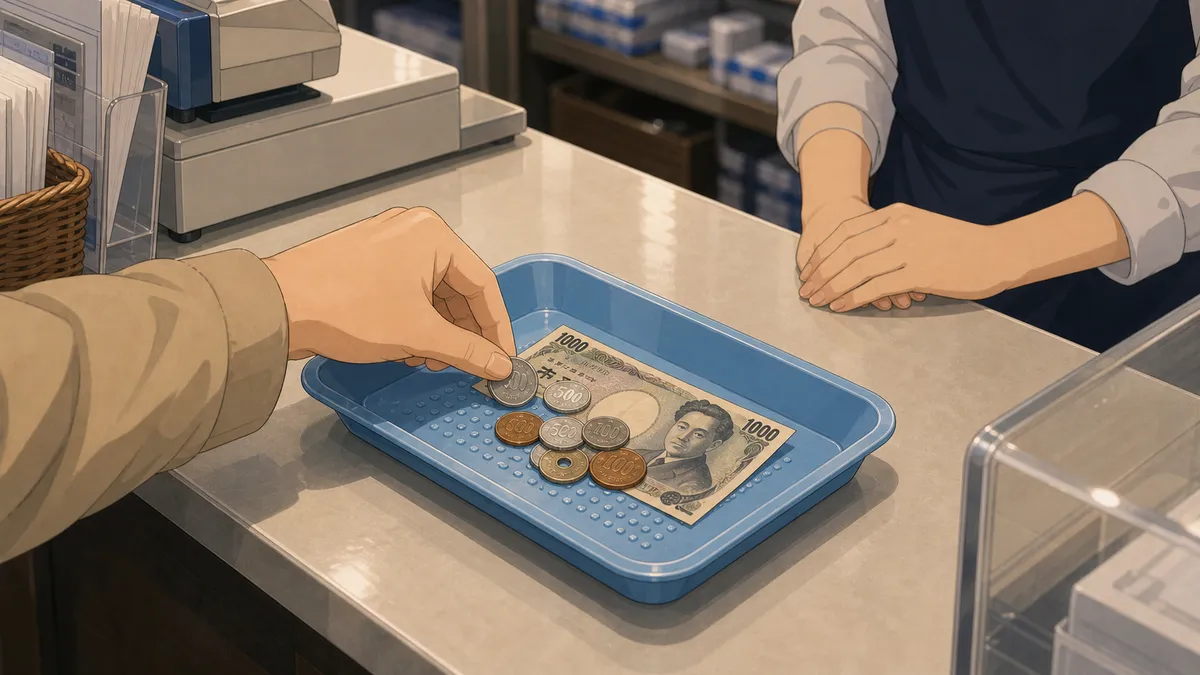
The short answer: in Japan, service is considered part of the price listed on the menu. Not an add-on. Not a variable you grade at the end of the meal. When you pay ¥1,200 for that bowl of ramen, the attentiveness, the refills, the bow at the door — those are already included in that number. Leaving extra money on top can land not as generosity, but as confusion, or occasionally as an implication that the listed price felt insufficient.
In Japan, service isn't a bonus you reward — it's the price you already paid.
This isn't a written rule you'll find in a guidebook. It's a structural assumption baked into how the whole transaction works. The receipt in Japan is a receipt — a statement of what was owed and settled. There's no tip line, no "gratuity not included" footnote, no quiet expectation hanging over the end of the meal.
What Service Actually Looks Like
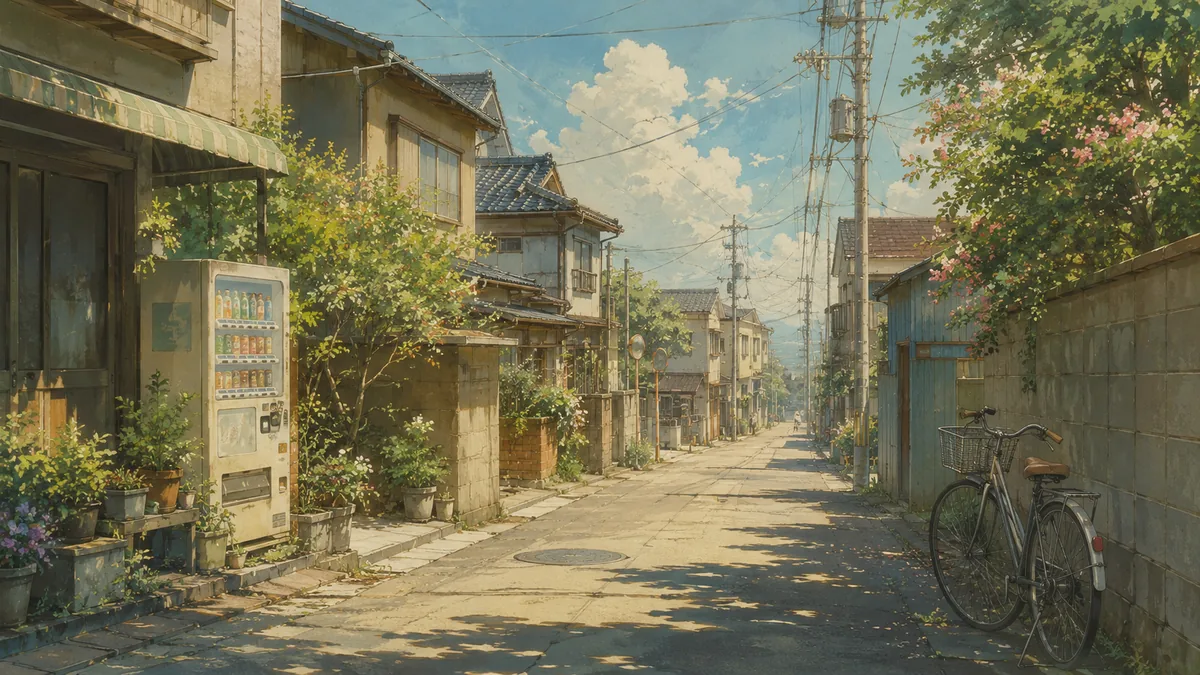
Pay attention to what happens the moment you walk into almost any establishment in Japan — a convenience store, a family restaurant, a small izakaya tucked down a back street. The irasshaimase (いらっしゃいませ) greeting arrives before you've taken two steps. A hot oshibori towel appears without being requested. Water is refilled quietly, from the side, without interrupting conversation. Change is handed back with two hands.
None of this is asking for extra approval. It's saying: this is how we do things here.
If you're learning Japanese or you've watched Japanese daily-life anime, you'll recognize this texture — the quiet competence in the background, the seamlessness that almost becomes invisible. That invisibility is, in a way, the point. Good service in Japan tends not to announce itself.
The Wage Structure Behind It
One thing worth stating plainly: tipping in the United States developed partly because American law allows a "tipped minimum wage" — a base hourly rate that is, in many states, below the standard minimum, with tips expected to bridge the gap. Servers in the US often genuinely depend on tips to make a livable income. The tip isn't a bonus there; it's structurally part of the expected wage.
Japan doesn't have a direct equivalent. Service workers are paid their contracted wage from their employer — the goodwill of individual customers isn't baked into their compensation model. (Whether those wages are adequate is a separate, legitimate question, and worth asking.) The tip as a mechanism for variable reward for variable service simply never took root in the same soil.
Personally, I'll admit the tipping system is still something I can't quite digest. To be clear, every country has its own historical and cultural reasons for the way it does things, so I've no intention of dismissing it out of hand. But if the point is to support workers' livelihoods, then why not just raise the base wages, so life is more stable to begin with? Sure, maybe there should be some separate avenue for people who go above and beyond to earn more. In fact, you often see people who live inside tipping cultures themselves grumbling online that it's genuinely wearing. And from the other direction, visitors to Japan are startled that the service is this good with no tip at all — sometimes going as far as "this isn't normal" — which, I think, lights up the same point from the reverse side. Not resting the foundation of someone's living too heavily on a customer's mood on a given day: that one thing turns out, from the outside, to matter more than you'd expect. Then again, this is probably just the opinion of someone who didn't grow up inside a tipping culture.
I won't claim this makes one system better than the other. Both have real problems. But the structural difference matters if you want to understand why the behavior diverged.
A Word on Omotenashi
You'll often hear omotenashi (おもてなし) invoked to explain Japanese hospitality — roughly, wholehearted service that anticipates what a guest needs before being asked, without expectation of reward.
Two things from my side of the counter. First, it isn't strictly true that Japan has no tipping at all. There is kokorozuke — at some traditional ryokan, a small envelope of money handed to the attendant at check-in. But notice the direction: it's given before the stay, as a greeting — "please take care of us" — not after, as a score. Second, if I had to name the base layer in one word, it really is omotenashi: the host's feeling comes first, and money doesn't chase after it. That, I suspect, is why even the one tipping-like custom we do have works as a hello rather than a reward.
And even outside special settings, the exchange of feeling is alive in ordinary life. I'll tell a taxi driver to keep the change sometimes — not as a score for the ride, just a small thanks for the trouble of the coins. And the flow runs the other way too: at a shop you visit often, an extra croquette slips into the bag with a quiet "omake" — a little extra, on the house. The gratitude circulates; it just doesn't use the tip's shape. It travels as goods, as small trouble taken, as words. Watching omake at work, I sometimes think the "extra money" in Japan flows more often from the seller to the customer than the reverse.
I'd still be careful with that framing. Omotenashi is a real word for a real orientation, but it sometimes gets used to make Japanese service feel like a spiritual mystery rather than a practical arrangement. That mystification isn't quite honest, and it tends to flatten the actual people doing the work.
Here's how I see it — one reading, not a verdict: perhaps there's something in treating service as inherent quality rather than variable performance. A worker isn't auditioning for your approval at the end of the shift. The job has a standard, and that standard is the job. Whether any individual worker experiences that framing as dignifying — or just as relentless, unacknowledged pressure — I honestly can't say. Of course, not everyone feels it the same way.
The Shadow Side
This is the part travel content tends to skip.
When high-quality service is built into the baseline expectation — when it's simply what any worker should do — individual effort becomes harder to see. A server who brings genuine warmth and care gets no more external signal than one quietly going through the motions. No tip, no differential. No moment that says: I noticed what you did today.
That invisibility has a cost. Politeness, when it becomes "natural" and "expected," can make the labor behind it disappear. The worker's extra care becomes part of the scenery.
It isn't only a warm system. For some of the people working inside it, the effort can feel taken for granted — invisible in the wrong way. Both the warmth and the flatness are real. I don't think one cancels the other.
Where to Notice It
If you want to feel this in action: walk into a convenience store at midnight and watch how the staff member handles your transaction — every motion practiced, every beat consistent, regardless of who's watching or how late it is. Or sit in the basement food hall of a department store (depachika) on a crowded Saturday, and notice how vendors offer samples with the same attentiveness they'd give a single customer on a quiet Tuesday morning.
One partial exception worth knowing: at some high-end ryokan (traditional inns), there's a practice called kokoro-zuke (心づけ) — a small envelope of cash sometimes given to the attendant at check-in. This isn't quite a tip in the Western sense. It's closer to an advance gesture of goodwill, given before the stay, not as a post-experience review. Whether this custom is expected, accepted, or declined gracefully varies significantly by ryokan — and many modern ones will gently refuse even this.
And if your gratitude genuinely wants a shape — one resident's take, for what it's worth: you can offer. Gently, once. Nobody will be angry at a sincere gesture. The one thing not to do is insist after it's been declined — the decline isn't false modesty, it's the system working. But honestly, you may not need the coins at all. A warm, unhurried thank-you — said like you mean it, maybe with a small bow — is received here in full. Most of the time, that alone genuinely delights the person behind the counter.
The Question It Leaves
No tip line on the receipt. No coins left on the table. Service that is, by design, already included.
Is that simpler? Warmer? Or does something get lost when there's no individual signal for individual effort?
I don't think there's a clean answer. People working inside this system are still people — some passionate, some exhausted, some somewhere in between. The no-tipping rule doesn't flatten that. It just means appreciation, when it exists, travels differently — through the quiet assumption that good work is the baseline, not something extra to be rewarded.
That sense of a kindness you don't pay extra for may connect, somewhere, to what sits behind the word omotenashi.
Sources & References
- A personal reading from everyday observation; no external sources cited for cultural analysis.
- On tipped minimum wage: U.S. Department of Labor, Fair Labor Standards Act — Fact Sheet #15: Tipped Employees (dol.gov)
- Omotenashi: standard Japanese dictionaries and general cultural reference
A Geek in Japan (Revised & Expanded)
A wide-angle introduction to the 'why' of Japanese culture — manga, anime, Zen, the tea ceremony and more. A natural companion to the topics Naze explores.
The Japanese Mind: Understanding Contemporary Japanese Culture
Chapters on aimai (ambiguity), amae, giri, wa and more — the values beneath the gestures and words. For readers who want to go deeper into the 'why.'
Share this article
Read Next
- Everyday JapanWhy Are Japanese Train Bento (Ekiben) So Special?Ekiben turn the train journey into a curated regional food tour. Here's the quiet logic behind Japan…
- Everyday JapanWhy Are There So Many Signs and Notices in Japan?Japan's streets and stations are layered with notices. Here's what the density reveals about preempt…
- Everyday JapanWhy Do Japanese People Care So Much About Seken?Seken — Japan's unnamed collective gaze — shapes everything from garbage etiquette to career choices…
- Everyday JapanWhy Do Japanese Households Still Keep a Handwritten Kakeibo? — The 1904 Method Behind the NotebookKakeibo — Japan's household account book — traces back to 1904, when journalist Hani Motoko proposed…
- Everyday JapanWhy Are Japanese 100-Yen Shops So Surprisingly Good? — The Daiso Model ExplainedJapan's 100-yen shops aren't just cheap stores — they run a specific model built on massive order vo…
Related Articles
Articles in the same category: